How Acoustic Pods Are Transforming Inclusive Learning Environments in Schools

Helen Roberts, headteacher and special educational needs coordinator (SENDCo), reports on the Simple Acoustic pod at Rampton Primary School.

Although I regard myself as an enthusiastic and passionate individual, the ubiquitous pressures of leadership with the shackles of budgets, policies, and protocols, often do their best to prevent those truly wondrous moments I used to experience years ago. In those days, the magic of an inspirational split-second ‘wowed’ me as a classroom teacher. I could feel something amazing was happening. Thankfully, I am happy to report that those occasions can still occur. As a professional with nearly 30 years in education, including a decade as a SENDCo and almost seven years as a headteacher, I can genuinely declare that magic was in the air at Rampton Primary School this year. So much so, I feel compelled to share this recent experience with the world. Never would I have believed that this transformative event would occur during a significant building improvement project, taking place across the entire school site.

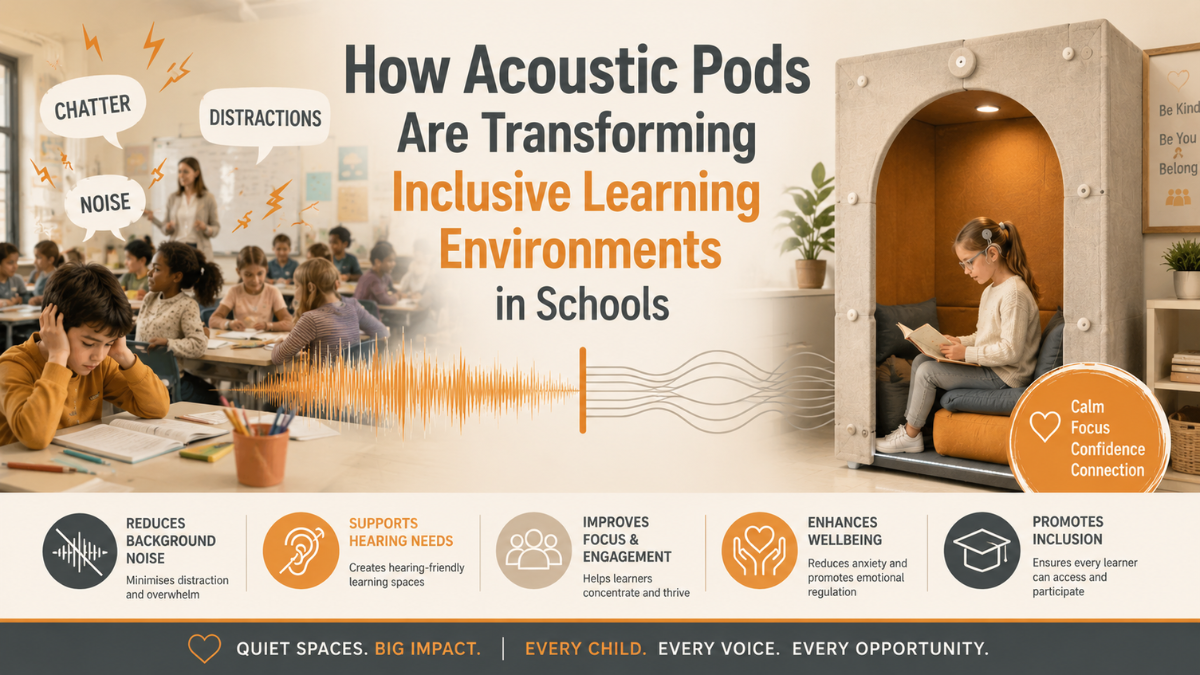
Classrooms are inherently vibrant and dynamic environments, resonating with the sounds of collaboration and engagement. However, during a major upgrade that started back in January this year, it quickly became evident that the increased noise levels caused by the various machines working throughout the site, exacerbated the constant school din and quickly overwhelmed both children and adults alike. It created an atmosphere that hindered rather than helped learning. This enormously impacted one pupil in particular: a Year 5 girl with severe, complex, and enduring special educational needs and disabilities (SEND) including moderate bilateral sensory-neural conductive hearing loss. Without hearing aids, this child cannot hear the spoken word.

As headteacher, it is not merely essential but my profound responsibility to cultivate inclusive practices, ensuring that every pupil receives the necessary support to flourish, both academically and socially. The immediate concerns we raised about the noise led to a conversation with my Qualified Teacher of Deaf Children and Young People (QToD), members of Arc Partnership, and Nottinghamshire County Council. 

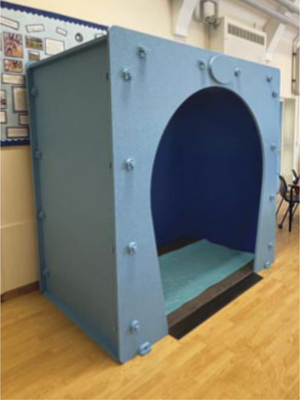
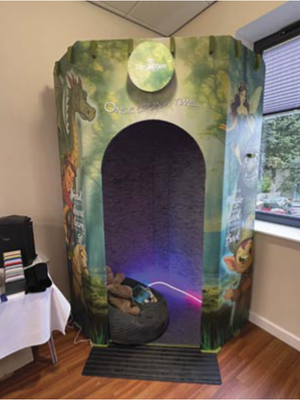
We needed something that would support this pupil whilst her class was rehoused during the classroom refurbishment. These discussions led to the involvement of Simple Acoustics Limited, and the conception of a portable fully-acoustic ‘pod’ was born!

The design of the pod was totally led by the student’s needs, ensuring there was enough space for her wheelchair as well as her teaching assistant (TA) and equipment. The plan was to place it in the school hall with the class and then relocate it once the building work had concluded. The pod was delivered during the Easter break and was built within an hour. On our return, the pod immediately created optimal acoustic conditions for our most vulnerable child, providing a sanctuary from the new onslaught of background noise. My colleagues and I observed its impact firsthand, noting remarkable acoustic absorption that minimised disruptive reverberation. Its integration transformed this child’s world overnight! Before the pod was constructed, she would regularly remove her hearing aids and lead her one-to-one to various places around the school where the noise level was tolerable. Following the installation of the pod, the child led her one-to-one to the pod! I was truly astonished when I regularly found her asleep – still wearing her hearing aids – or sharing a book under a blanket with a newfound ability to concentrate and engage, liberated from the anxiety of excessive noise levels.

It was truly wonderful to personally witness the acoustic pod enable a markedly positive learning experience, effectively mitigating noise-induced stressors that distracted her from her education. Staff members utilising the pod reported substantial improvements in the pupil’s concentration levels, which directly correlated with levels of engagement and overall wellbeing. This thoughtfully designed space empowered my pupil to participate fully in lessons, engage meaningfully with their peers and embrace the joys of learning. From a time when the removal of her hearing aids communicated her unhappiness, she was seen once again smiling and dancing, as she did before the upgrade.

I am genuinely astounded by the profound impact the Simple Acoustic pod has had on our school community. It embodies our unwavering commitment to fostering an inclusive educational environment, ensuring that every child has access to the highest quality of learning. The impact has been so profound that I have secured additional funding and will soon be installing my second pod which will be located in our new ‘Wellness Room’. The unbelievably sad fact is that I did not consider the effect that environmental acoustics was having on this pupil until the background noise increased.

Despite being in education for nearly 30 years with a plethora of roles and responsibilities ranging from being an early years foundation stage (EYFS) and key stage 1 (KS1) lead, to wellbeing lead, SENDCo, and headteacher, I never engaged in this discussion. No one ever mentioned the acoustics of my classrooms or school. I knew pupils’ voices had an impact on concentration, but that was where the conversation stopped. If I kept the children fairly quiet whilst working, I was doing my job. No one talked to me about soft furnishings, carpets, or having tennis balls on the legs of my chairs. I simply wasn’t aware that acoustic reviews, treatments, or solutions were available. And now I know, I simply can’t stop talking about it. I sincerely hope that the new Office for Standards in Education, Children’s Services and Skills (Ofsted) Inspection Framework, with its standalone strand that focuses on inclusion, will also have other headteachers talking about it.

Looking toward the future, I am deeply grateful for the resource and remain optimistic about its continued positive effects on learners facing various barriers, including those with autism spectrum disorder (ASD), attention deficit hyperactivity disorder (ADHD), sensory needs, and, of course, hearing loss. Their resourcefulness and adaptability are yet to be fully explored, but I believe their potential is boundless.

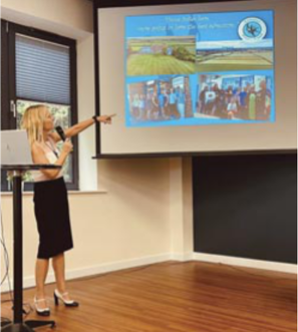
I recently had the pleasure and privilege of sharing my experience at the BATOD North Study Day in Huddersfield. I know I was preaching to the converted when speaking to a room of incredible, like-minded professionals who spend their working lives breaking down barriers and enhancing the lives of the children and young people they support. It was an absolute delight to speak to so many passionate people and have the opportunity to ignite a collective spark of possibilities. In advocating for such vital resources, we pave the way for a brighter, more inclusive future for all our students.

Helen Roberts has been the headteacher of Rampton Primary School since 2019, bringing nearly three decades of primary education experience to her role. She holds a Bachelor of Education (BEd) in Primary Education from Liverpool University and a master’s in SENDCo from Nottingham Trent University. Helen also serves as SENDCo, designated safeguarding lead, and mental health first aider at the school. A passionate champion for children with SEND, Helen is dedicated to breaking down barriers to learning and ensuring every child can reach their full potential. Her expertise in inclusive practice, person-centred planning and removing barriers to learning, underpins her commitment to creating an educational environment where all children thrive. Under her leadership, Rampton Primary School achieved a ‘Secure Good’ Ofsted rating in 2022 and the EYFS provision was awarded Excellence Leadership and Outstanding Team by Nottinghamshire County Council. Helen has completed extensive professional development, including a National Professional Qualification (NPQ) in Behaviour and Culture, Certificate in Instructional Coaching, and comprehensive training in autism, dyslexia, Makaton, and supporting children’s mental health and wellbeing. Beyond education, Helen is an accomplished children’s author, having published six books between 2019 and 2025, demonstrating her commitment to literacy and inspiring young minds through both leadership and creative storytelling.
Share this story: