🔹 Overview
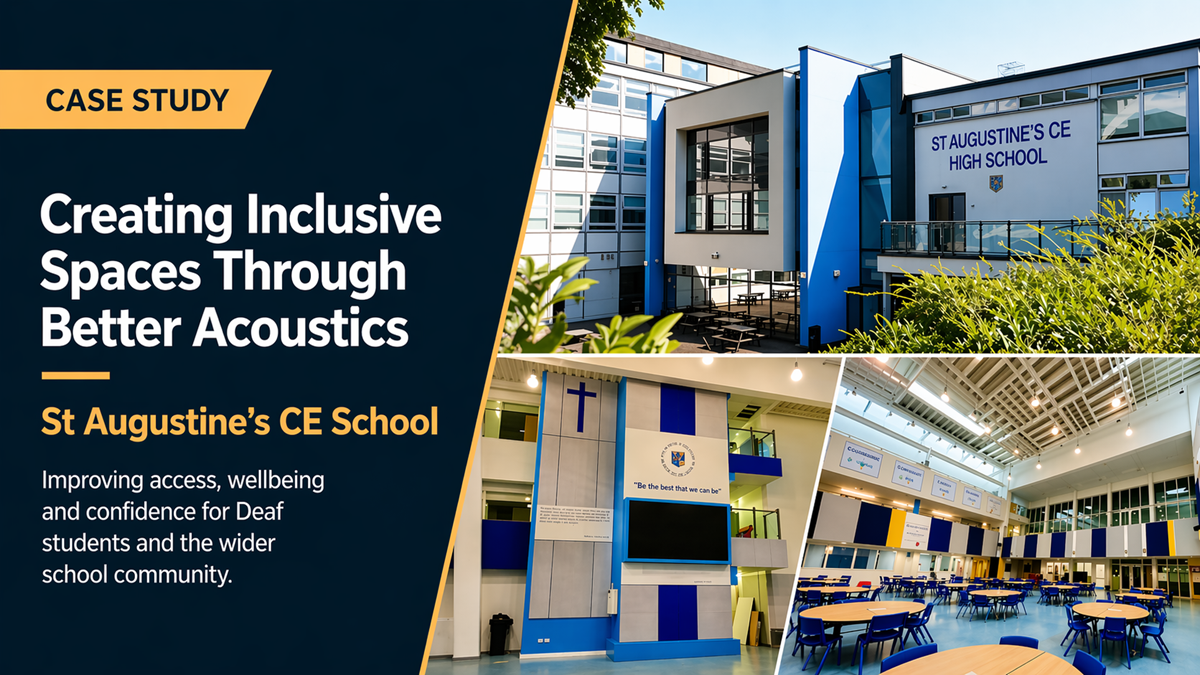
Simple Acoustics partnered with St Augustine’s CE School to address significant acoustic challenges affecting their Deaf Student Provision (DSP). The project focused on improving sound quality across key communal and learning spaces to create a more inclusive, accessible environment for all students.
🔹 The Challenge
Students within the Deaf Student Provision faced daily difficulties accessing lessons and social spaces due to poor acoustics. Classrooms,particularly science rooms, made it harder for students to follow teaching, while communal areas such as the Atrium and stairwells created overwhelming noise levels.
The dining area was especially problematic, with constant background noise making it difficult for deaf students to communicate with peers. This led to feelings of isolation, discomfort, and reduced engagement during what should be social and relaxing times.
While the school had some acoustic considerations in place within the DSP itself, wider areas of the school had not been treated, impacting students’ overall experience and wellbeing.
🔹 The Solution
Following successful funding approval, Simple Acoustics carried out a comprehensive acoustic treatment programme across the school.
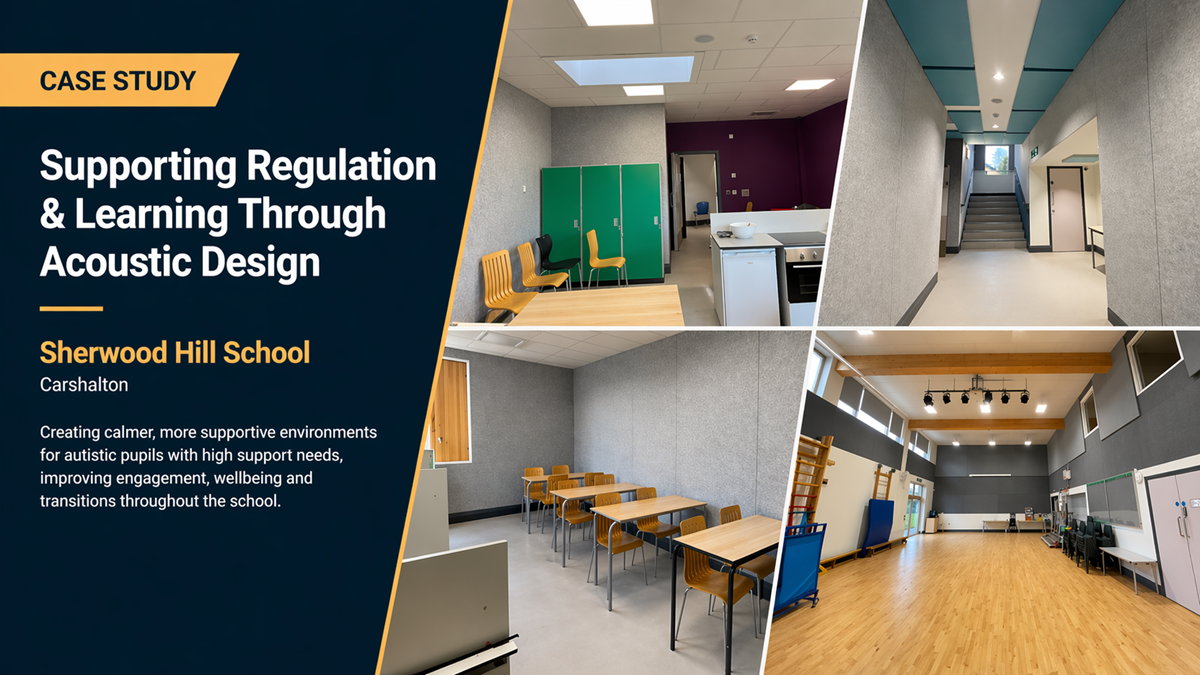
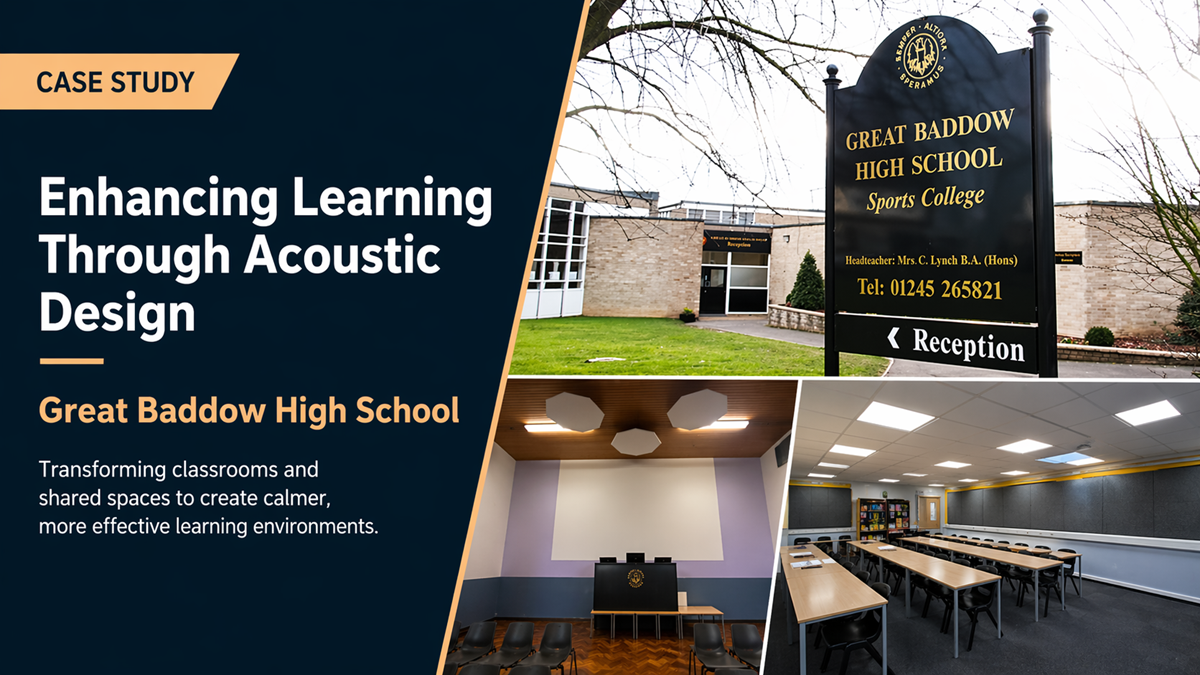
This included treating the Atrium, hallways, stairwells, and multiple classrooms with poor acoustics. Each space was carefully assessed to ensure the most effective solution was applied, reducing noise levels while maintaining the functionality and flow of busy school environments.
The installation was completed efficiently during the summer period, ensuring minimal disruption to the school.
🔹 The Results
The impact of the project was significant, with noticeable improvements in noise levels, student wellbeing, and overall engagement across the school.
Deaf students reported feeling happier, less anxious, and more confident in both learning and social settings. Improved acoustics enabled them to better access lessons, participate in conversations, and engage with their peers resulting in increased academic progress and self-esteem.
The benefits extended beyond the Deaf Student Provision, positively impacting all students, including those with additional needs such as autism, and contributing to a calmer, more controlled school environment.
The impact of the project is best captured in the school’s own words:
I joined the Deaf Student Provision (DSP) in 2017 as a trainee Teacher of the Deaf. During this time, I began to realise the challenges our Deaf students face when accessing lessons, especially in some of the classrooms with poor acoustics; this was particularly noticeable in the science rooms. In addition, I found that students experienced discomfort in other areas such as the Atrium and the stairwells daily. They reported that the worst experience of poor acoustics was in the Atrium while having their lunch.
The Atrium – the dining area within the school – tends to be very noisy. The sound of clatter cutlery, chairs dragging along the floor as well as the general noise from students caused this environment to become very loud, and almost unbearable for our deaf students.
As we know, lunch and break time for students is meant to be a relaxing time with the opportunity to play and socialise with their peers, however this was not the case for our deaf students. They stated that the noise levels caused them a number of issues such as struggling to interact with their hearing peers, which made them feel uncomfortable and isolated as they were exposed to such extreme levels of noise. Although our school was built with the intent to have a deaf unit, a soundfield system as well as acoustic treatment in the unit itself, there was little thought and consideration given as to how noise levels could also be minimised throughout the school. Minimising noise levels throughout the school is necessary and improves students everyday school life experience; social and emotional well-being.
A bid was submitted to the LA and we managed to secure some funding for acoustic treatments which was completed in the summer of 2019 by Greg and his team. It was one of the major projects in school and I have to say they did an amazing job. We managed to treat the whole Atrium and the hallways on the ground floor leading to the stairwells, as well as a number of classrooms with poor acoustics.
The feedback from our students and staff members was very positive and there have been drastic changes in terms of noise levels across the school. The Deaf students feel happier, less anxious and more confident. The acoustic treatment enabled them to Hear, Engage, Access, Learn and Progress. Their engagement, participation and performance were evident leading to an increase in academic progress.
Furthermore, they were motivated and eager to join their hearing peers for lunch in the atrium, as well as feeling more comfortable and empowered to engage in conversations, leading to a higher-level self-esteem. It’s also worth mentioning that the acoustic treatment was not only having a positive impact on deaf students, but also on all students including those with a larger range of special educational needs and to those with Autistic spectrum disorder, making their daily school life experience more positive and enjoyable.
Finally, the behaviour across the school improved, and many teachers have commented that students were more conscious and appeared to be calmer and in control of their voice volume.
I would like to leave you with the quote from John Erdrich PhD:
“We would never teach reading in a classroom without lights. Why then do we teach in ‘acoustical darkness’. Speaking to a class, especially of younger children, in a room with poor acoustics, is akin to turning out the light.”
Mrs. Semic – Deaf Student Provision Lead
St Augustines CE School